

On resolutions and record keeping
a navel-gazing exercise examining on the consumption that fueled 2025

Since 2018, I have kept a handwritten log of all the books I read each year. I started this when I found myself, more often than I’d care to admit, unable to remember the titles and/or authors of books, identifying them like an illiterate toddler—“You mean the one with the banana-yellow cover by the author who lives in Santa Fe?”
I’m not alone. In Olga Tokarczuk’s latest novel, a braided narrative of fairy-tale-like entries accompanied by richly depicted domestic scenes, the narrator details the trouble with memory,
“Many of the things Marta has told me have not stayed in my memory, but have just left a vague impression, like mustard on the edge of a plate after the food has been eaten. Odd scenes, funny or frightening, and odd images torn out of context have remained — children catching trout from a stream with their bare hands, for instance. I don’t know why I have stored this kind of detail while forgetting the rest of the story. It must have made some sort of sense—it was a story after all, with a beginning and an end—but I remember nothing but the pips, which my memory, quite rightly, has had to spit out later on.”
Tracking production or consumption is a practice suited not only to scientists interested in precise measurements or chefs looking to tweak recipes into perfection. Recording one's input and output helps us both reflect on where we’ve been and helps us plan for the future. Henry David Thoreau, who legend has painted in rosy hues as a simple wilderness hermit, wrote daily logs of phenological data, his emotional state, expenses, and labor, all in the pursuit of figuring out how to live more deliberately. Earlier this month, in her inaugural newsletter, R.O. Kwon detailed her process for putting one foot in front of the other while writing novels over the course of many years. Oliver Burkeman suggests penning a daily “done” list to fuel forward action.
My aforementioned monogamous relationship with a handwritten reading log persisted for several years, until this past summer, when I let things slide a bit. This was, as with most habits, not a conscious undoing of a decision but rather a gradual system failure.
Last week, as I reviewed the year’s library checkouts and scanned my bookshelves, the work of putting the list back in order sparked a basic AHA moment. The act of keeping a log reveals patterns useful in their own right. How did I spend my time? Did my choices fuel a more interesting life? Did I simply put one foot in front of the other, playing follow the leader, or blaze my own trail of literary, culinary, and cultural consumption glory? What sort of work makes me sit up straight and pay attention? What makes me want to do better work? Teaches me new things? Makes me want to be a better person? Connects me to both my community and places I’ve never been? Conversely, what sort of work leaves me feeling flat, cold, disconnected?


Patterns/Actionable Takeaways
Booker is my prize of choice (for 2025, anyway).
When engaging in the daily drudgery of life — cleaning and driving at the top of my list — audiobook thrillers and first-person memoirs help the minutes tick by. Literary fiction is a bit tougher to keep up with this way.
For as many books as I read in 2025, there exists an equal stack of books checked out from the library or purchased and not yet opened. Or paged through enough to have given it the old college try, but not quite enough to actually form an opinion about the thing. This is FINE. Disagree? Read Umberto Eco’s “How to Justify a Private Library.”
Despite the fact that independent and smaller presses often produce some of my favorite books, they weren’t as prevalent on my list as titles from the Big Five. Note to self: do a bit more legwork on the front end, stacking the TBR list with books from my favorite presses, including (but not limited to) the following:
Foundry Editions
Fitzcarraldo Editions
Europa
Tin House
Graywolf
Milkweed
Granta
Charco
And Other Stories
While I’ve evolved in my ability to process multiple books at one time, they must fall into distinct camps — no doubling down on more than one work of literary fiction at a time.
I bought a few new volumes of poetry1, revisited Jane Kenyon, and restarted my subscription to Poetry Magazine. I failed to record any of this.
Despite introducing (at a minimum, still catching up on the record keeping here) more than 30 new and used cookbooks/food writing volumes to my personal library this year, I formally recorded zero. This will change in 2026.
Chasing a specific number of books as a goal is an empty pursuit. It’s the substance that counts. I read a lot this year, but found myself racing through some texts and discarding others. My 2026 mantra: pay close attention. More notes, more noticing.
A surefire holdover from my bookseller days, but also a desire to be a part of the ongoing literary conversation: the vast majority of my books were published in the last 24 months. History has a lot to teach us. I’ll be working on this.
The above is a start. I’m just now diving into my 2026 goal/resolutions (thank you Austin Kleon for pointing me to this 2021 article on Dead Week and recognizing we absolutely do not have to have it all figured out by January 1). I’ll be spending time here, indulging in my penchant for lists and record-keeping anew, while probing work that fuels productivity and creativity.
And so without further ado, the top ten eleven2 books I relished in 2025. And following, a nearly3 complete list of the 89-ish books4 I read this past year. Don’t sleep on “For the Rest of the Table” at the letter’s end.

Top Ten Eleven of 2025
The Safekeep, Yael van der Wouden
van der Wouden offers up a wonder of a post-Holocaust tale, written in taut yet lyrical sentences. A deeply felt (at times blushingly graphic) romance between two women that moves along at a thriller pace, it kept me reading well past my bedtime.
Lion, Sonya Walger
Written in the present tense, this autobiographical novel by actress Sonya Walger focuses on the protagonist’s father who does not have his shit together. He is a con man of sorts, going to extraordinary lengths to avoid one-on-one time with his daughter. A foreign businessman, a Formula One driver, a skydiver — this man seems to be everything and everywhere except with his family.
Stone Yard Devotional, Charlotte Wood
Meditative, soaring, contemplative, spare and yes, infused with sorrow, this gorgeous novel follows one woman’s voluntary retreat from the world and her struggle to reconcile her past with her current reality (living at a Catholic convent of sorts). Lest you think this is a novel of moral superiority, you won’t find much religious reflection here. Instead, a quiet yet profound meditation on the intersection of humans and the natural world and what it means to forgive.
Raising Hare, Chloe Dalton
A study of accidental attachment to the natural world from an unlikely source, this sort of writing is reminiscent of Margaret Renkl, Annie Dillard, Anne LaBastille. I want to read and write more like this.
Flesh, David Szalay
Follows the sex-fueled life of the emotionally damaged/detached István. Early chapters explore a deeply imbalanced relationship that one, with the gift of readerly distance, can clearly see is doomed. The relationship ends dramatically, but the reader remains side-by-side with István throughout the ebb and flow of the life left to live. Taut sentences unaffected by the coolly flawed protagonist create a surprisingly propulsive reading experience.
The Book of Records, Madeleine Thien
In a world seemingly on the verge of collapse, a young girl and her father make their way to a building that resembles a holding station. Past, present, and future collide resulting in a non-linear heady read that one only needs to submit to for a hugely satisfying, mind-blowing experience.
The Birthday Party, Laurent Mauvignier
My love for this book is so strong, I dedicated an entire lovenewsletter to it.

The Loneliness of Sonia and Sunny, Kiran Desai
The same goes for Desai’s latest masterpiece, which earned a inspire long write-up last month.

The Land In Winter, Andrew Miller
A marvel of pastoral minutiae, I’ll be writing more about this come January. Hunger, both physical and emotional, looms large, haunting two couples, both expecting their first children. Communication is not a strong suit. Each of the four main characters is unquestionably tied to the other in the manner of rural folk who must depend on neighbors not simply for a cup of sugar but more consequential life/death situations.
House of Day, House of Night, Olga Tokarczuk
An unnamed narrator moves to a remote Polish village and finds herself the recipient of an enormously engaging download of all the comings and goings of her fellow community members. Reading this feels like what meditation teachers refer to as submitting to the collective consciousness, each story not a distinct narrative but a contribution to the greater whole.
The Correspondent, Virginia Evans
Does everyone see themselves in Sybil Van Antwerp? Just me? An epistolary novel of the highest caliber, I’m not sure I can separate my love for this book from its author who is beyond charming, smart, funny, and simply does the work. To be present with this book is to plumb the depths of what it means to be human: the good, the bad, the true.

January
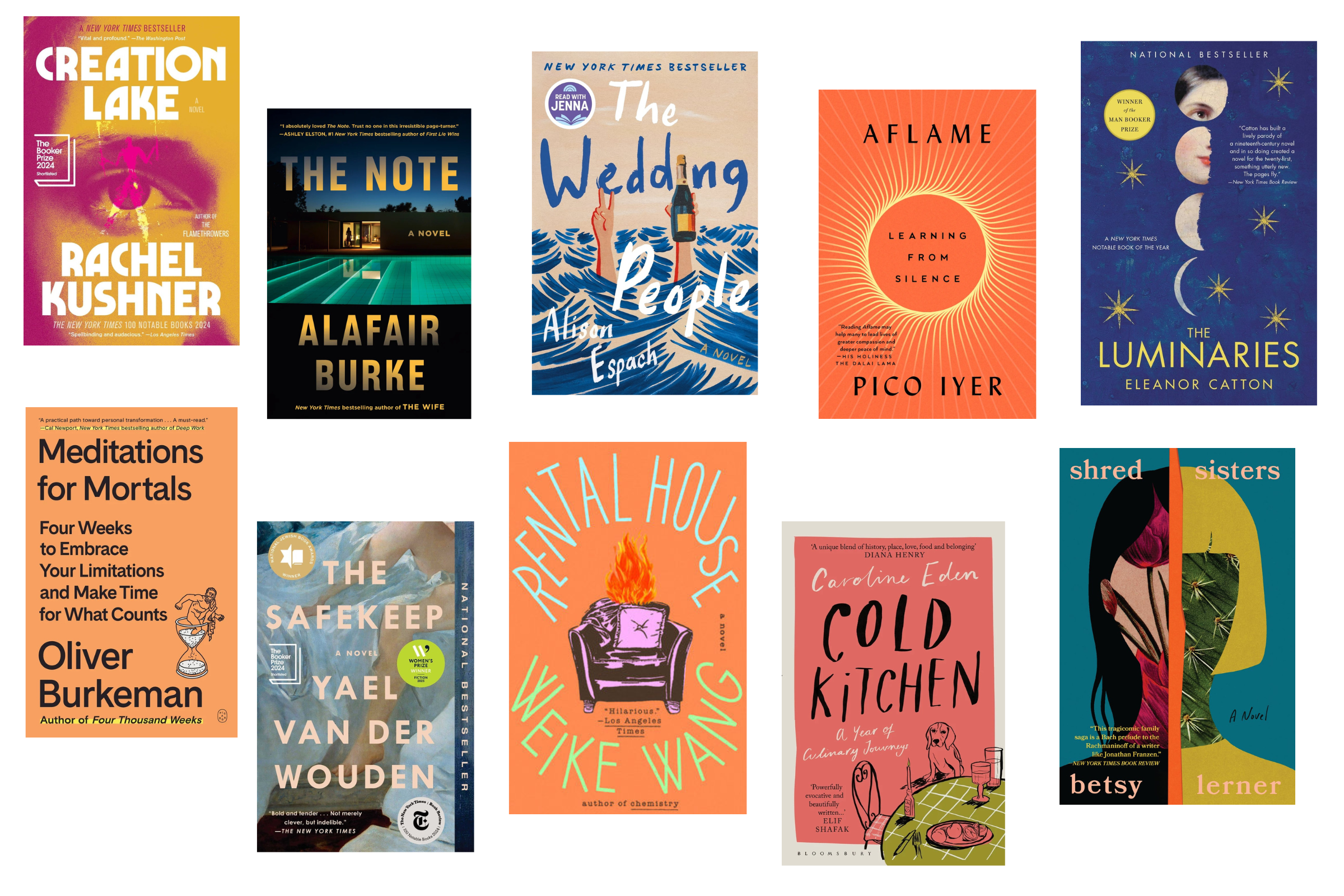
Creation Lake, Rachel Kushner • The Note, Alafair Burke • Wedding People, Alison Espach • Rental House, Weike Wang • Aflame, Pico Iyer • Meditations for Mortals, Oliver Burkeman • Cold Kitchen, Caroline Eden • The Luminaries Eleanor Catton • The Safekeep, Yael van der Wouden • Shred Sisters, Betsy Lerner
February
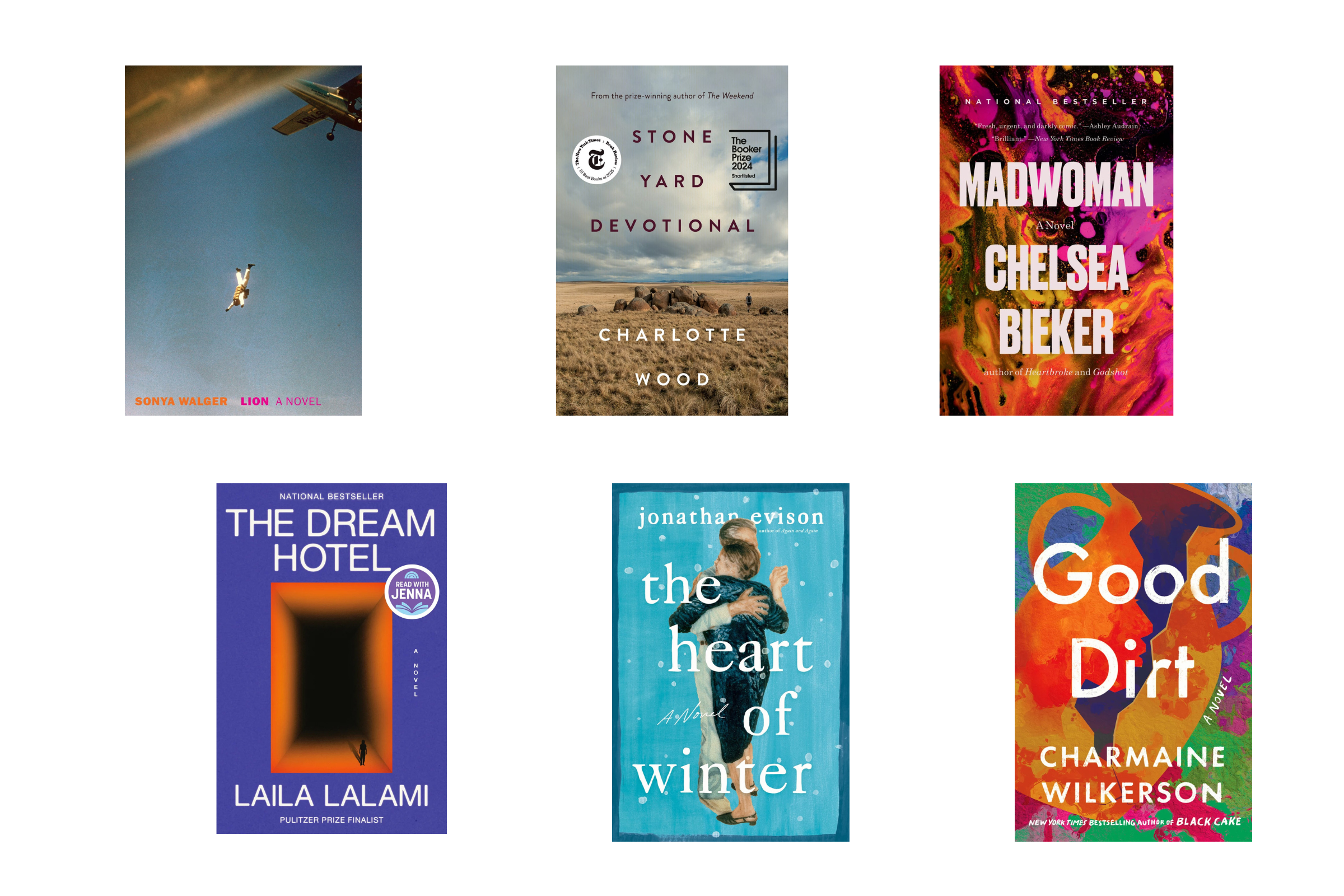
Lion, Sonia Walger • Stone Yard Devotional, Charlotte Wood • Madwoman, Chelsea Bieker • The Dream Hotel, Laila Lalami • The Heart of Winter, Jonathan Evison •Good Dirt, Charmaine Wilkerson
March
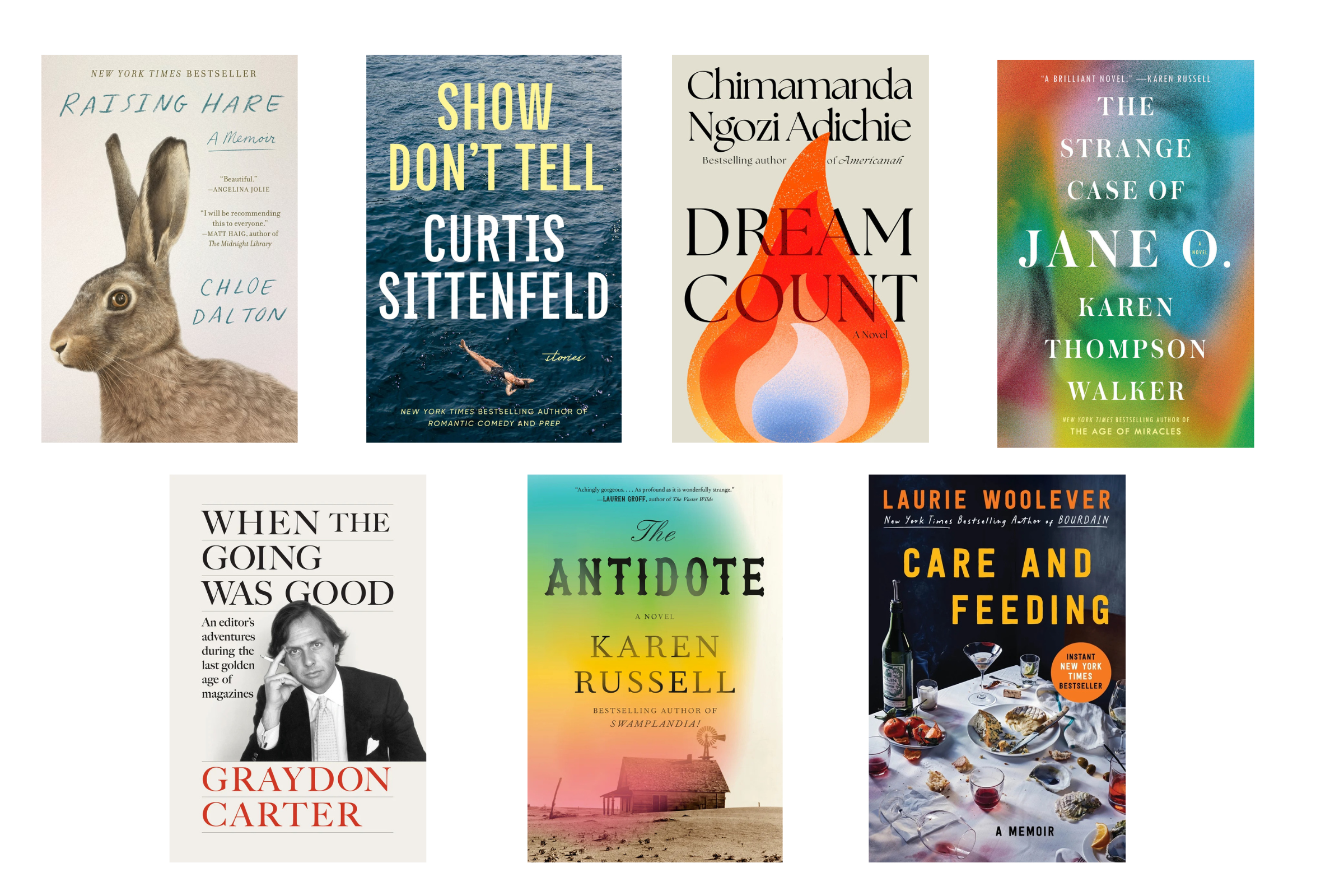
Raising Hare, Chloe Dalton • Show Don’t Tell, Curtis Sittenfeld • Dream Count, Chimamanda Ngozi Adichie • The Strange Case of Jane O., Karen Thompson Walker • When the Going Was Good, Graydon Carter • The Antidote, Karen Russell • Care and Feeding, Laurie Woolever
April
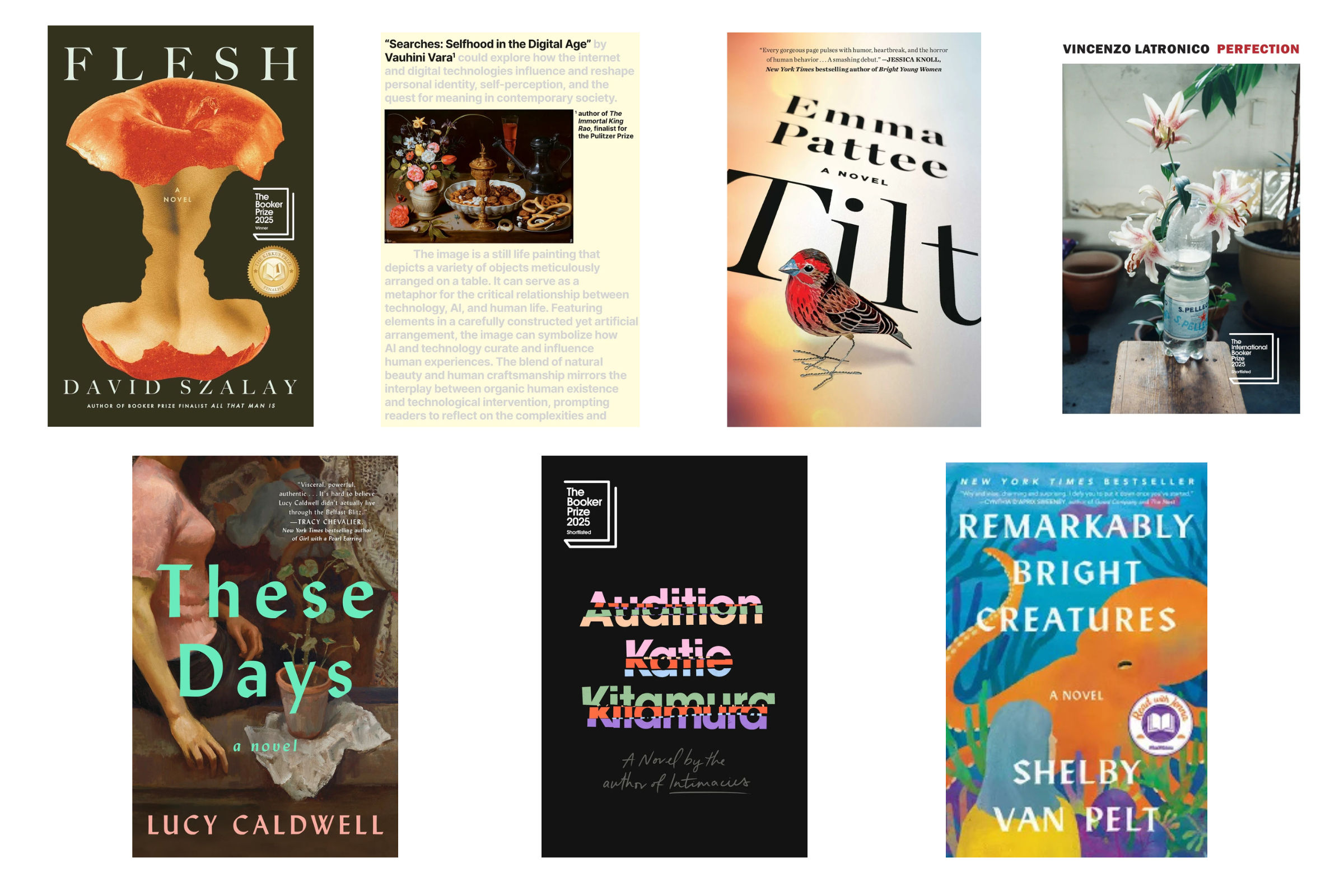
Flesh, David Szalay • Searches: Selfhood in the Digital Age, Vauhini Vera • Tilt, Emma Pattee • • Perfection, Vincenzo Latronico • These Days, Lucy Caldwell • Audition, Katie Kitamura (shockingly DNF, don’t know why, going back in) • Remarkably Bright Creatures, Shelby Van Pelt
May
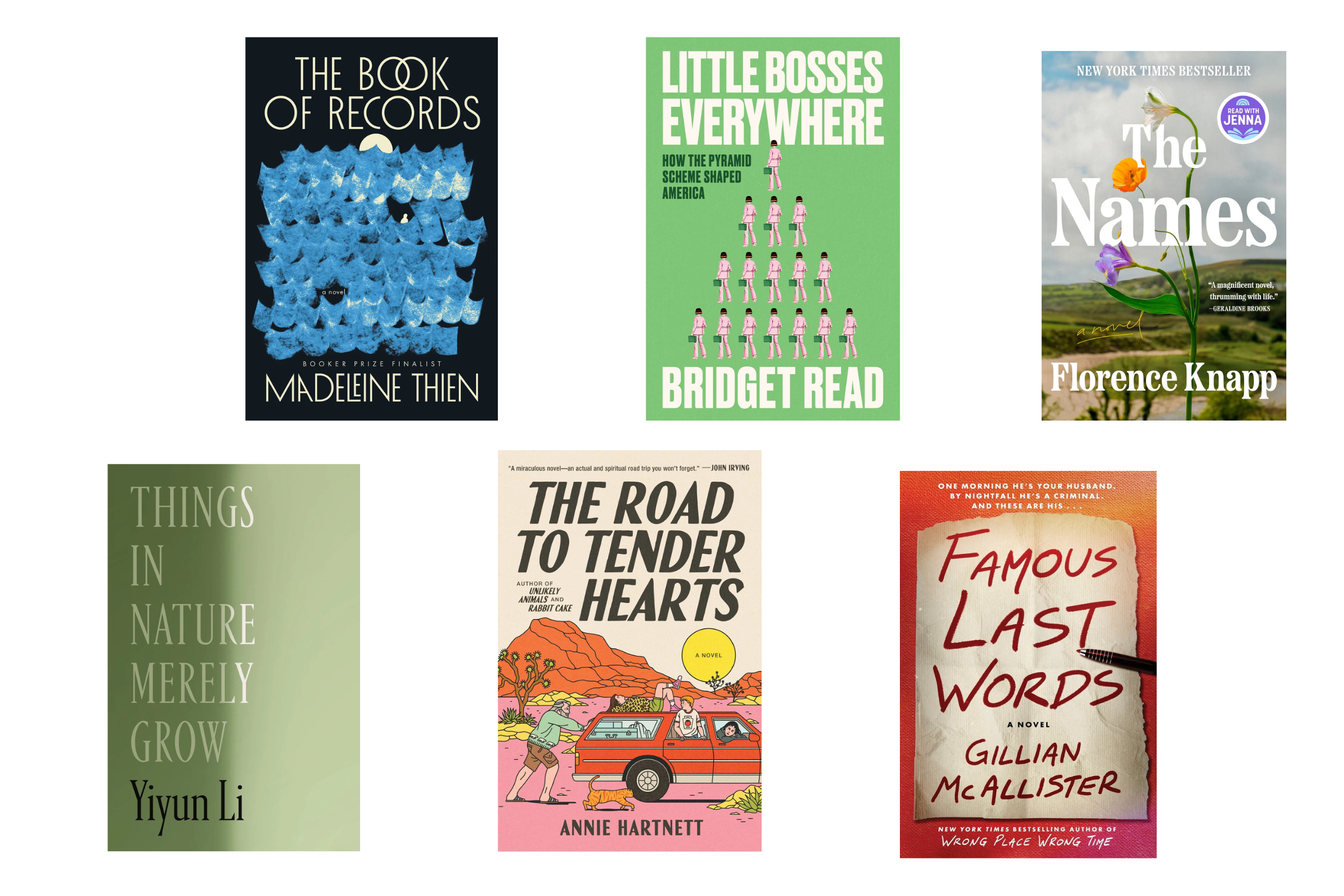
The Book of Records, Madeleine Thien • Little Bosses Everywhere: How the Pyramid Scheme Shaped America, Bridget Read •The Names, Florence Knapp •Things in Nature Merely Grow, Yiyun Li • Road to Tender Hearts, Annie Hartnett • Famous Last Words, Gillian McAllister
June
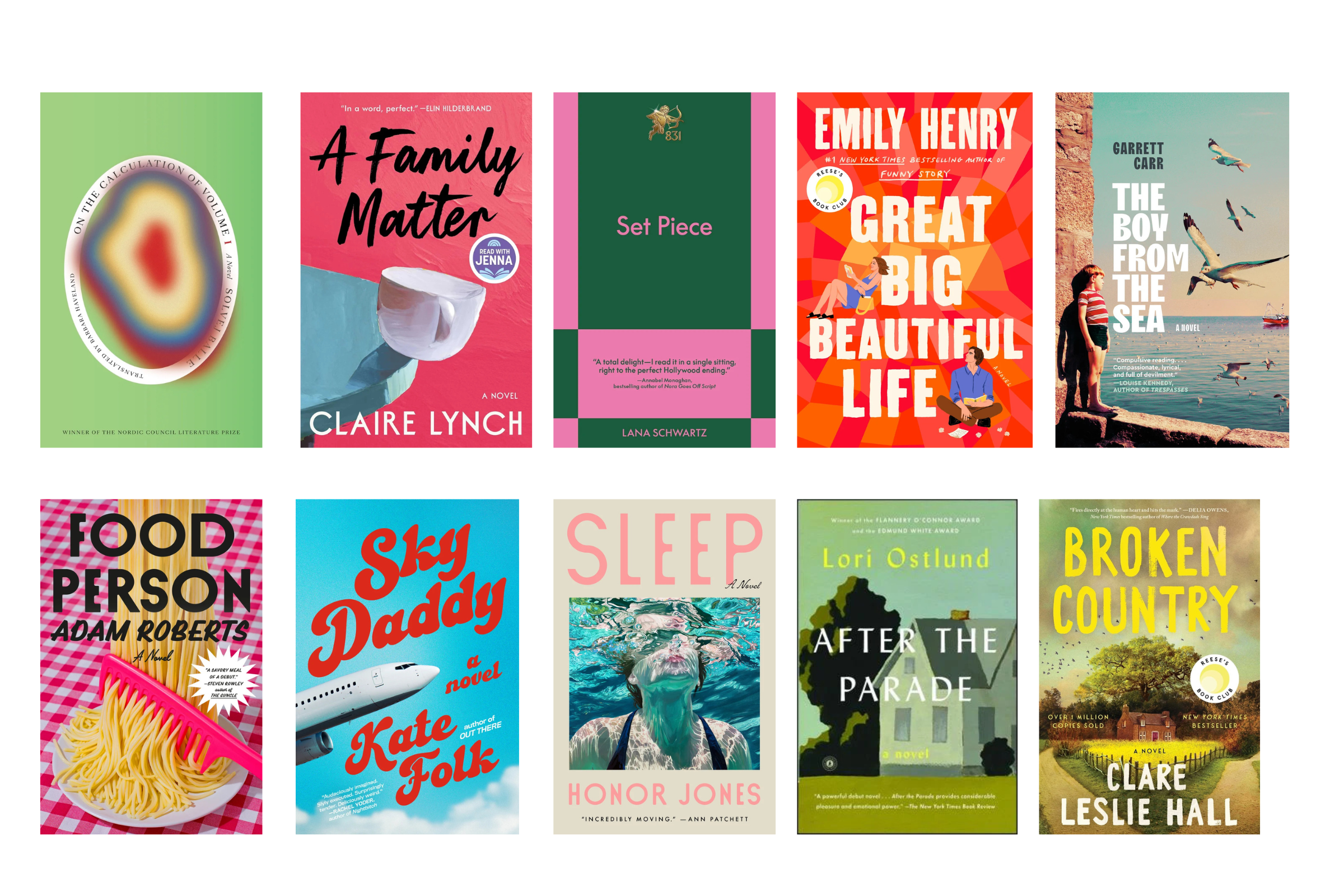
On the Calculation of Volume I, Solvej Balle • A Family Matter, Claire Lynch •Set Piece, Lana Schwartz • Great, Big, Beautiful Life, Emily Henry (DNF) • The Boy From the Sea, Garrett Carr • Food Person, Adam Roberts (DNF) •Sleep, Honor Jones •Sky Daddy, Kate Folk • After the Parade, Lori Ostlund • Broken Country, Claire Leslie Hall
July
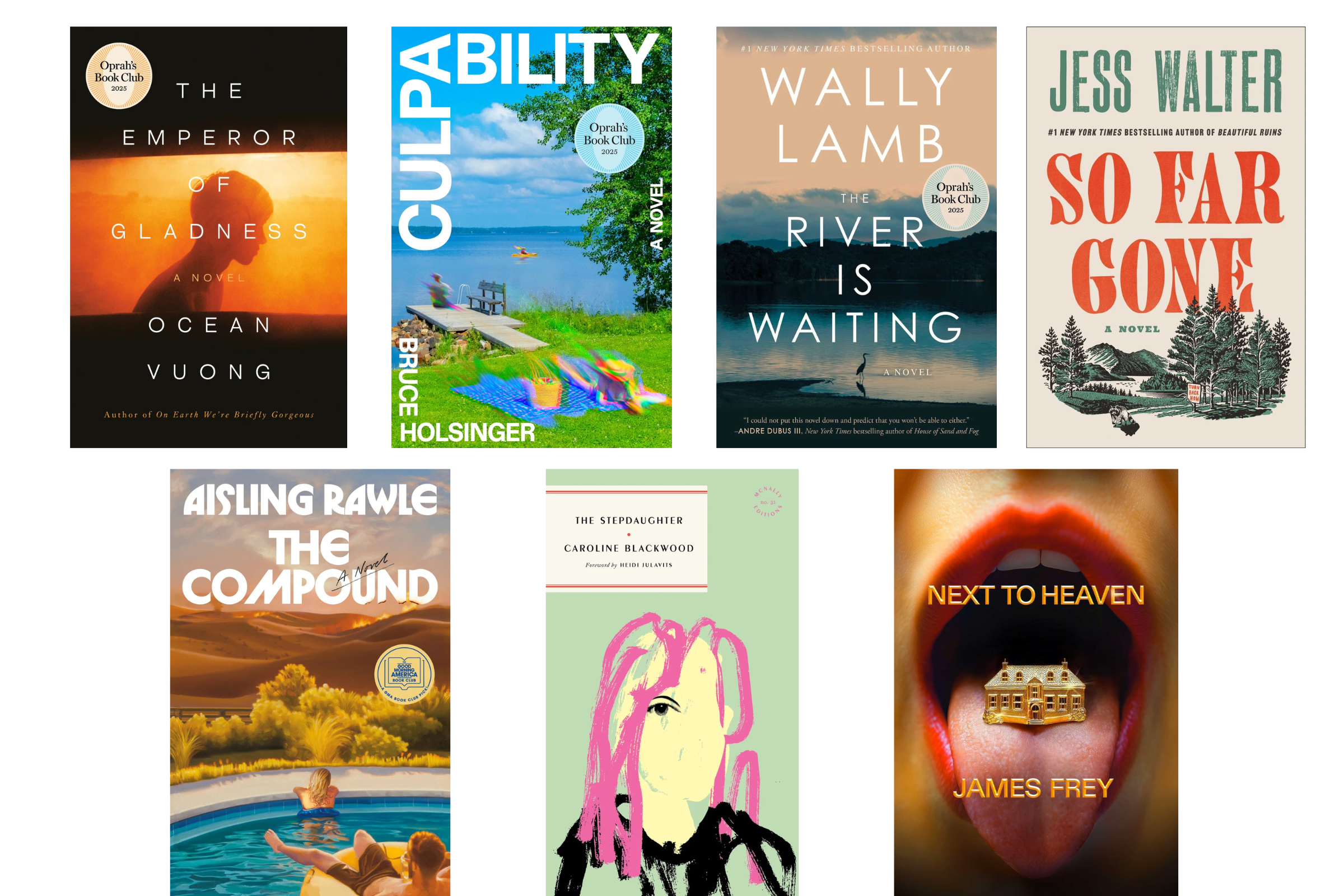
The Emperor of Gladness, Ocean Vuong • Culpability, Bruce Holsinger • The River is Waiting, Wally Lamb • So Far Gone, Jess Walter • The Compound, Aisling Rawle • The Stepdaughter, Caroline Blackwood • Next to Heaven, James Frey • The Satisfaction Cafe, Kathy Wang
August
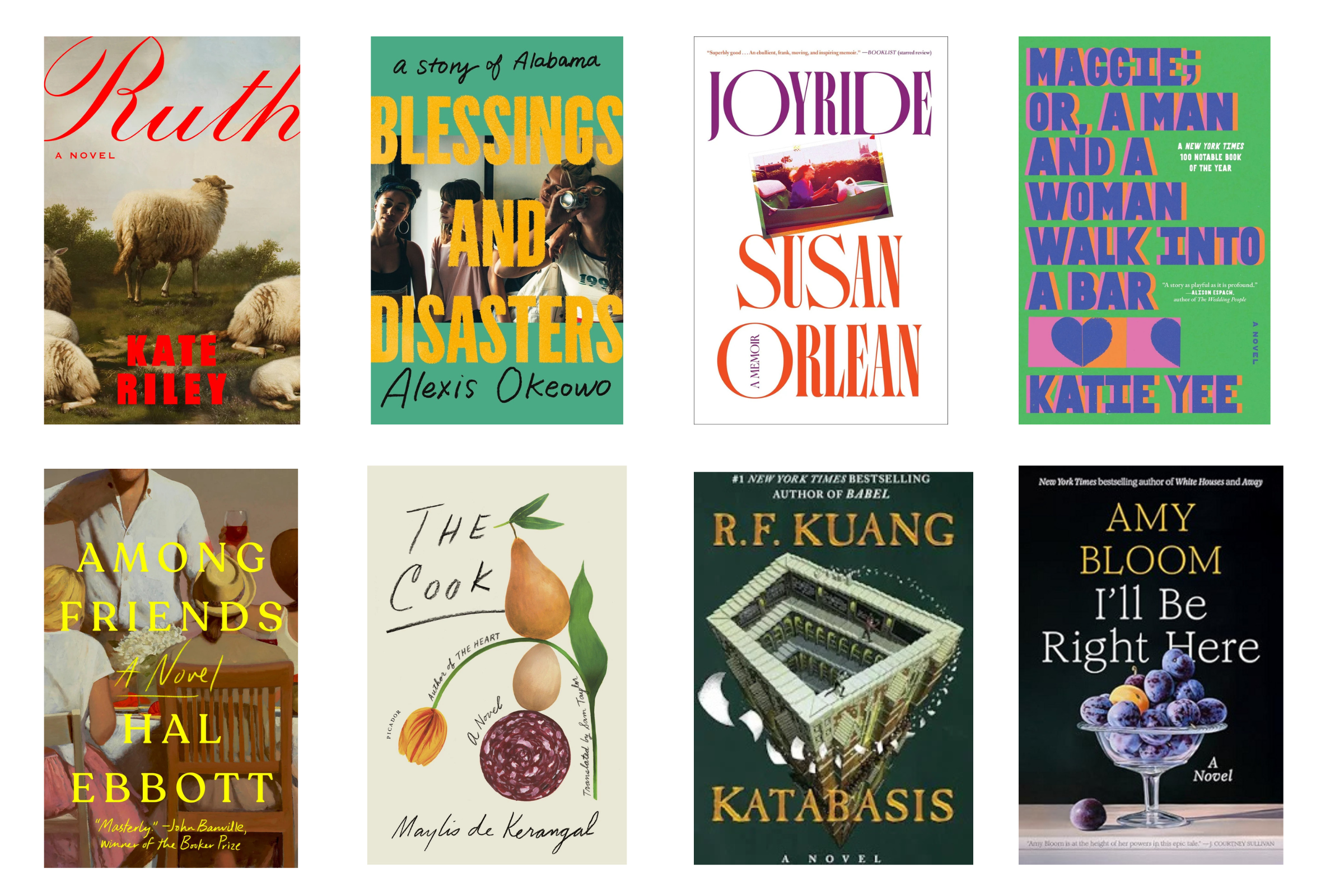
Ruth, Kate Riley • Blessings and Disasters, Alexis Okeowo • Joyride, Susan Orlean • Maggie; or, A Man and a Woman Walk Into a Bar, Katie Yee • Katabasis, R.F. Kuang • Among Friends, Hal Ebbott • The Cook, Maylis de Kerangal • The Sisters, Jonas Hassen Khemiri • I’ll Be Right Here, Amy Bloom
September
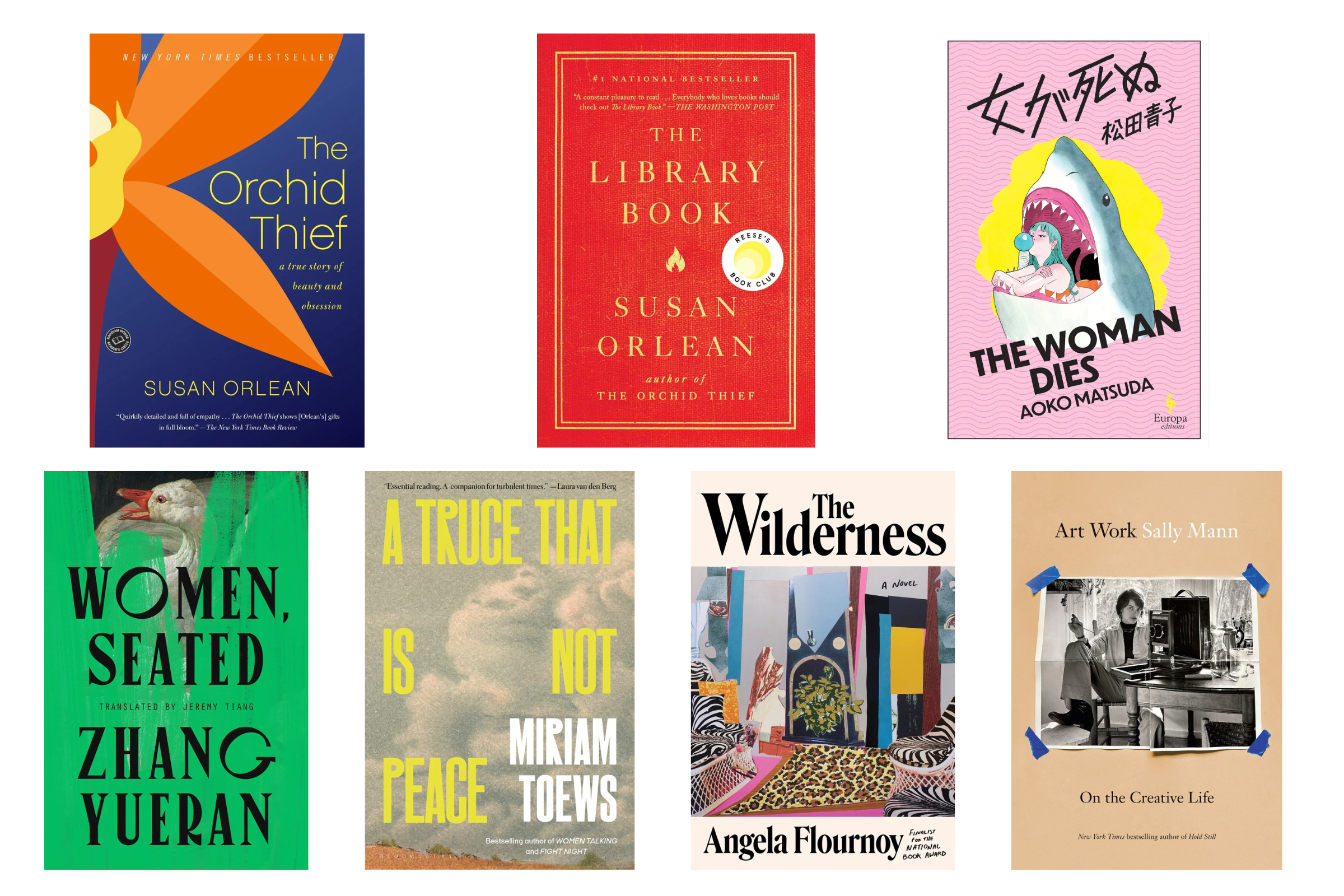
The Orchid Thief, Susan Orlean • The Library Book, Susan Orlean • The Woman Dies, Aoko Matsuda • Women, Seated, Zhang Yueran • A Truce That Is Not Peace, Miriam Toews • The Wilderness, Angela Flournoy • Art Work: On the Creative Life, Sally Mann •
October
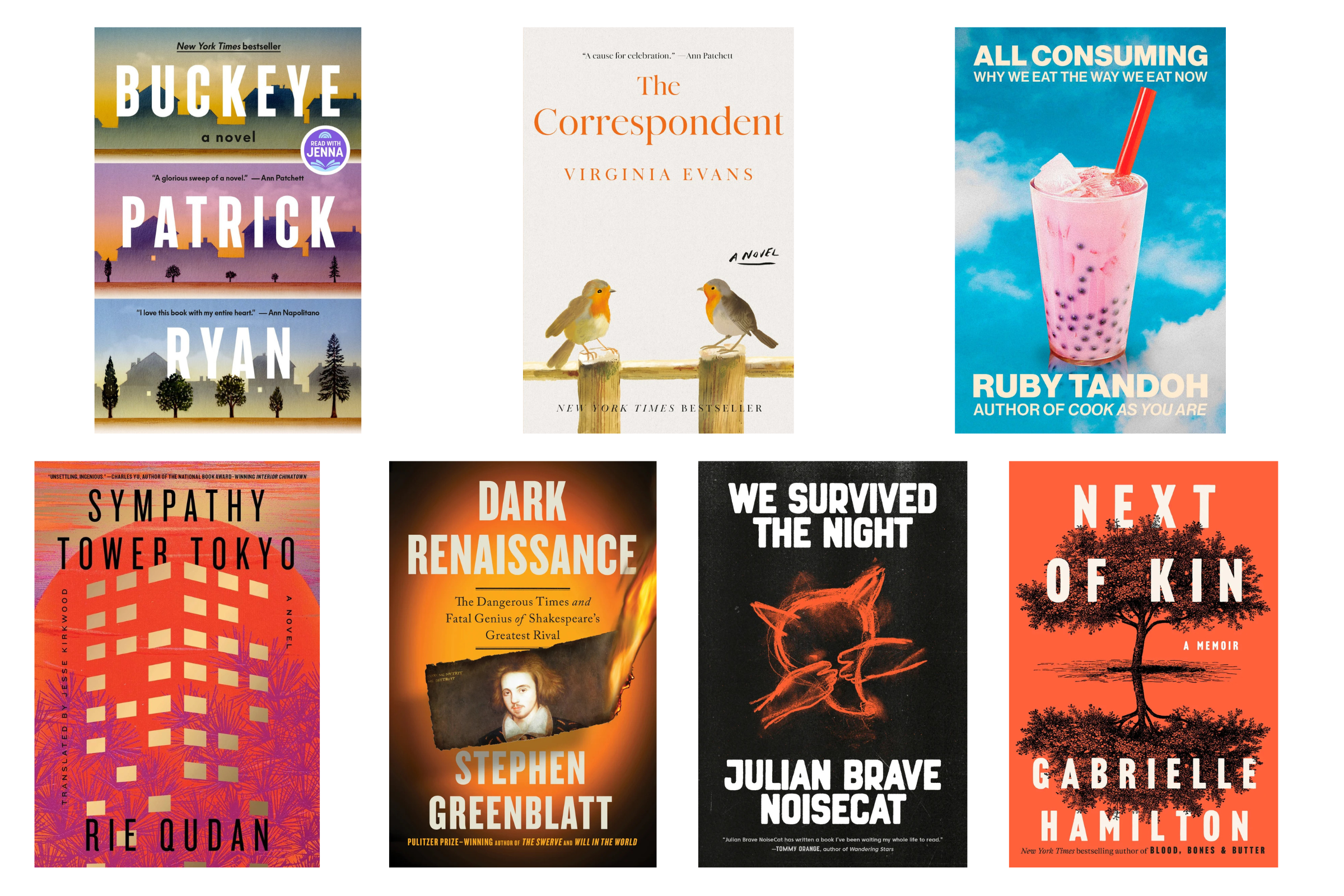
Buckeye, Patrick Ryan • The Correspondent, Virginia Evans • Sympathy Tower Tokyo, Rie Qudan • All Consuming: Why We Eat the Way We Eat Now, Ruby Tandoh • Dark Renaissance, Stephen Greenblatt (DNF, WF) • We Survived the Night, Julian Brave NoiseCat (DNF) • Next of Kin, Gabrielle Hamilton
November
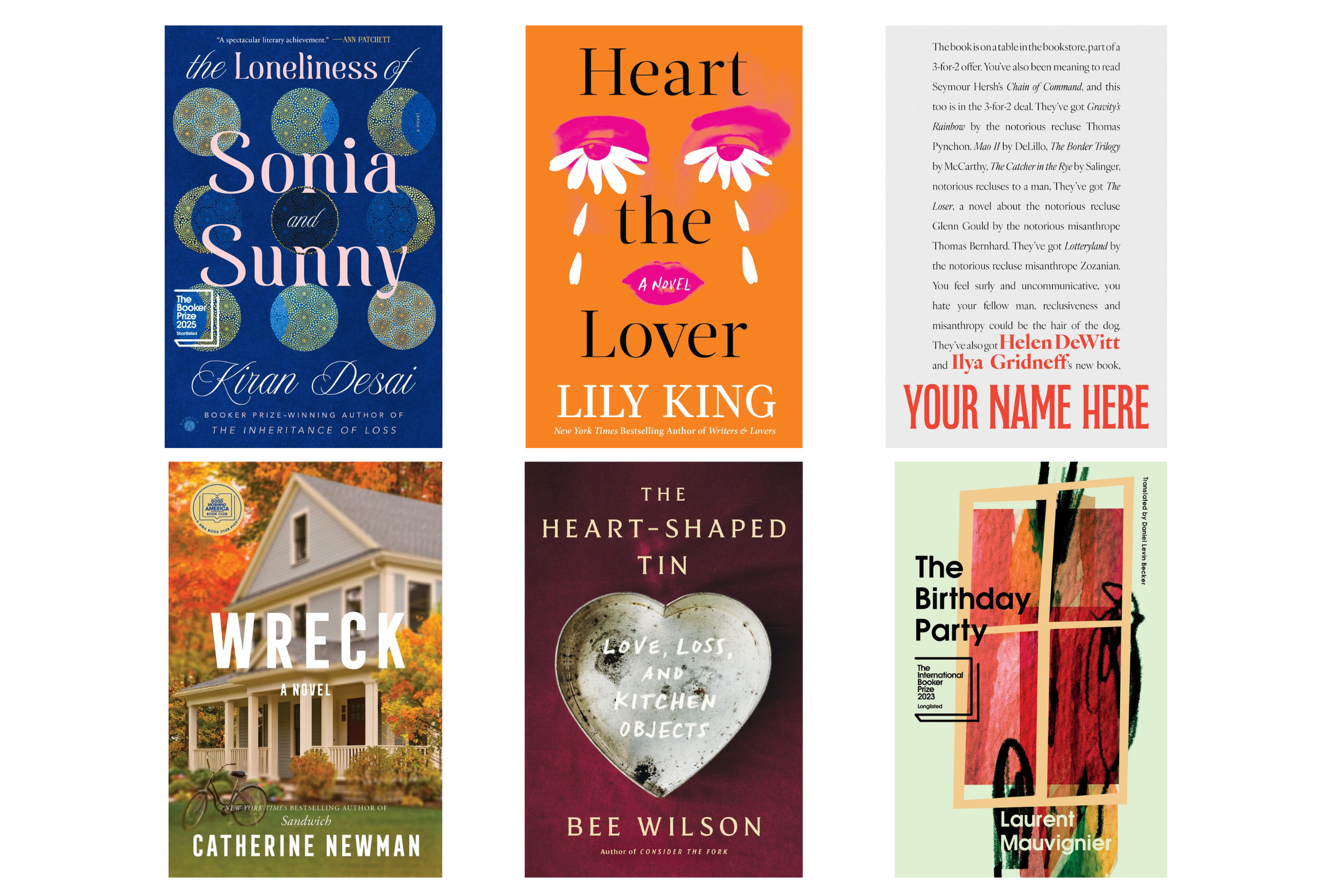
The Loneliness of Sonia and Sunny, Kiran Desai • Heart the Lover, Lily King • Your Name Here, Helen DeWitt and Ilya Gridneff (DNF, IDKWTF to do with this, need a support group PLEASE; LATE-BREAKING NEWS: a NYD gift from The Atlantic5 has saved me, stay tuned for updates) • Wreck, Catherine Newman • The Heart-Shaped Tin, Bee Wilson • The Birthday Party, Laurent Mauvignier • Last Night at the Lobster, Stewart O’Nan (not pictured)
December
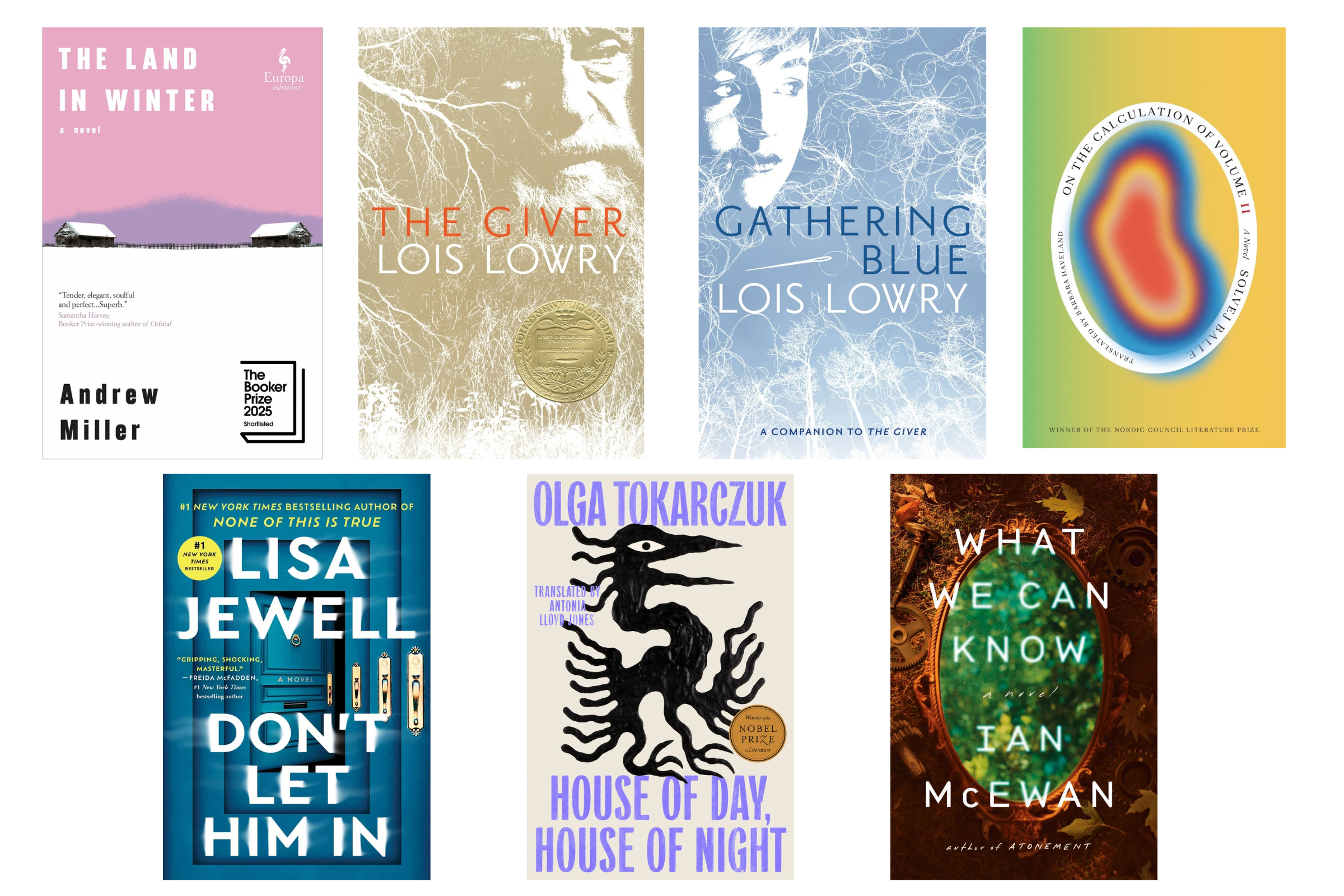
The Land In Winter, Andrew Miller • The Giver, Lois Lowry • Gathering Blue, Lois Lowry • On the Calculation of Volume, II, Solej Balle • Don’t Let Him In, Lisa Jewell • House of Day, House of Night, Olga Tokarczuk • What We Can Know, Ian McEwan

Lei
Go for the wine list, chilled celtuce with kombu jelly, shallots and red vinegar, and insanely good silken tofu dip that I will be working to recreate at home this weekend.


Susan Orlean recommends The Secret Agent and Marty Supreme
That’s enough endorsement for me. I’m also not to proud to admit that I freaking loved The Hunting Wives which got me through many a December wrapping/dish-washing session. I needed something totally mindless and you have to hand it to this cast of ladies who gave of themselves entirely. Don’t watch it in a public space.
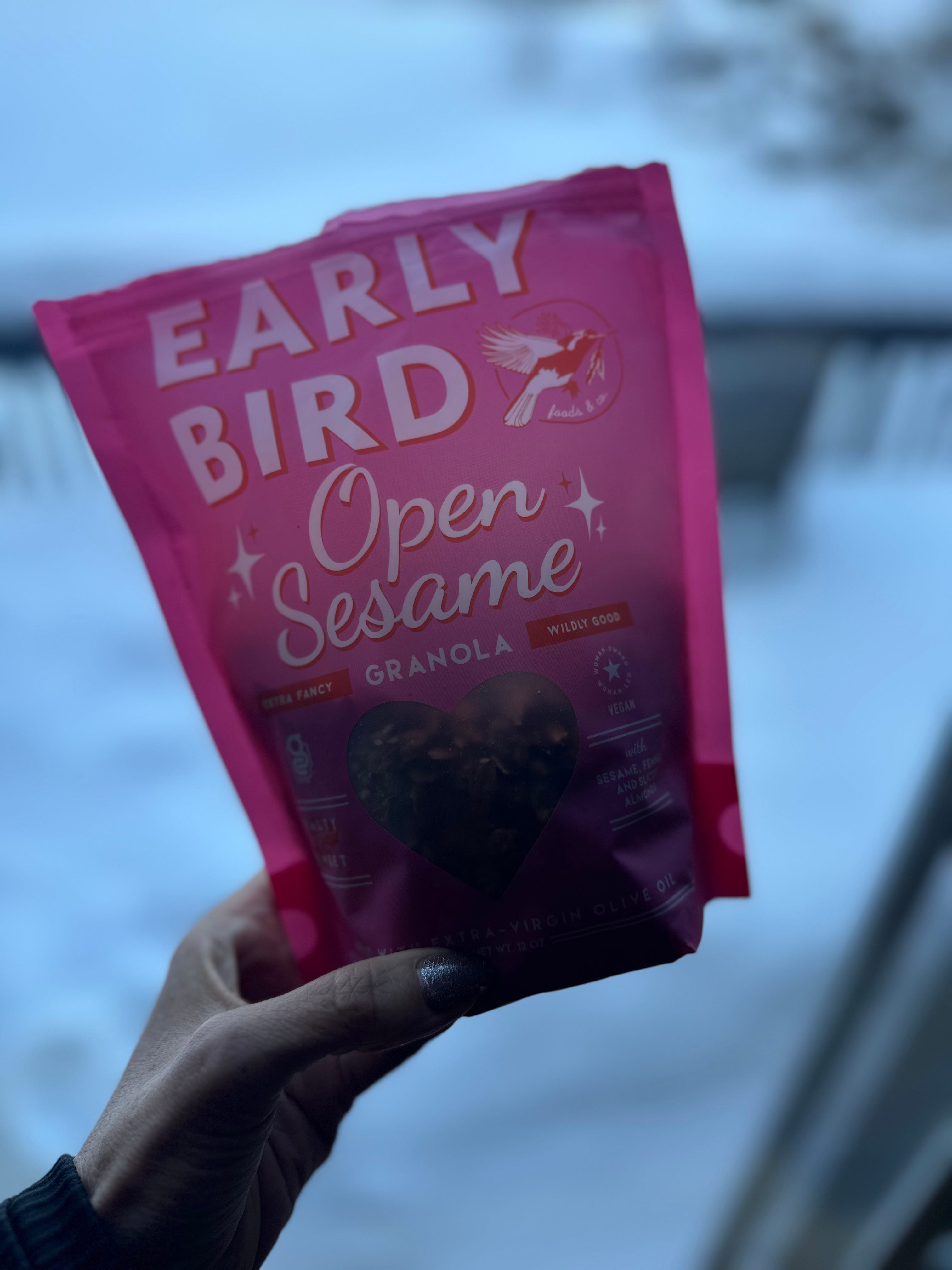
Early Bird Open Sesame Granola
I have no idea whether this is a new drop or has been lurking on shelves outside my grocery radius; either way it is, as the kids say, BUSSIN. Another weekend recreation project set, I’ll take down the sweetness a bit. Fennel seed, black and white sesame seeds, I bet we could throw some tahini in here and make it taste real nice.
From Ian McEwan via What We Can Know (recommend):
“The spoken or written poem was as old as literature, perhaps as old as speech, with roots in song, in the rhythms of daily life and the body’s pulse, in the hunger to catch the passing moment and to glorify love […] Poetry, it was said, was the senior service […] The novel was the froth of recent centuries. It had developed to meet the needs of intelligent, privileged women excluded from formal education and meaningful work. Indeed ‘work’ was the word that Jane Austen and others used to describe womanly hours of incessant and pointless embroidery as they chatted about their neighbours. And so, Mary insisted, the novel grew into the paradigm of higher gossip. Love, marriage, adultery, contested wills — the stuff of neighbourly fascination. It took modernism to shake the novel up (Mary had no regard for Tolstoy or George Elliot) and offer it higher aspirations and bolder claims.”
So much to unpack.
What’s the point of running your own newsletter if you can’t buck convention? Getting wild and crazy over here, I know.
As noted, my system failed and my brain is a sieve - each time I get ready to send this newsletter, another forgotten volume emerges from the annals of my distracted mind. We’re all doing our best.
Book links are affiliate links through Bookshop.org. You can both support local independent bookstores and my research and recommendations by purchasing through the links.
https://www.theatlantic.com/books/2026/01/challenging-book-literature-dewitt-gridneff-your-name-here/685453/?gift=Ep0VHJKB03nxoewh9rZb_prIe8BHcMKVWh6Rwz2RUYg&utm_source=copy-link&utm_medium=social&utm_campaign=share
I need another lifetime to
Very impressive reading! #goals